Walk down any accessory aisle and you will see the same claim printed on almost every box: 9H. It sounds like a protection score, and most shoppers read it as one. In practice, 9H describes a very narrow property of the glass surface.
The number comes from the pencil hardness scale, a workshop method that runs from 9B (very soft lead) to 9H (very hard lead). To rate a screen protector, a technician drags progressively harder pencil leads across the surface at a set angle and pressure, then checks whether the film is scratched. A 9H result means the coating survived the hardest standard lead.
So a 9H rating is really a statement about scratch resistance from soft, everyday abrasion — keys in a pocket, a coin on a café table, a zipper pull. That is a genuinely useful property. It is simply not the same thing as surviving a drop onto tile.
Materials science separates two ideas that marketing tends to merge:
Diamond is the hardest natural material and also brittle. A substance can score high on one scale and low on the other. A phone screen protector is a thin sheet of tempered glass roughly 0.33 mm thick, so its real protective value comes from spreading impact across a wide area and failing first, so your display does not. That is a structural behaviour, not a hardness number.
This is why a protector rated 9H can still crack from a corner drop onto concrete while leaving the display underneath intact. The glass did its job. The rating on the box simply never promised otherwise.
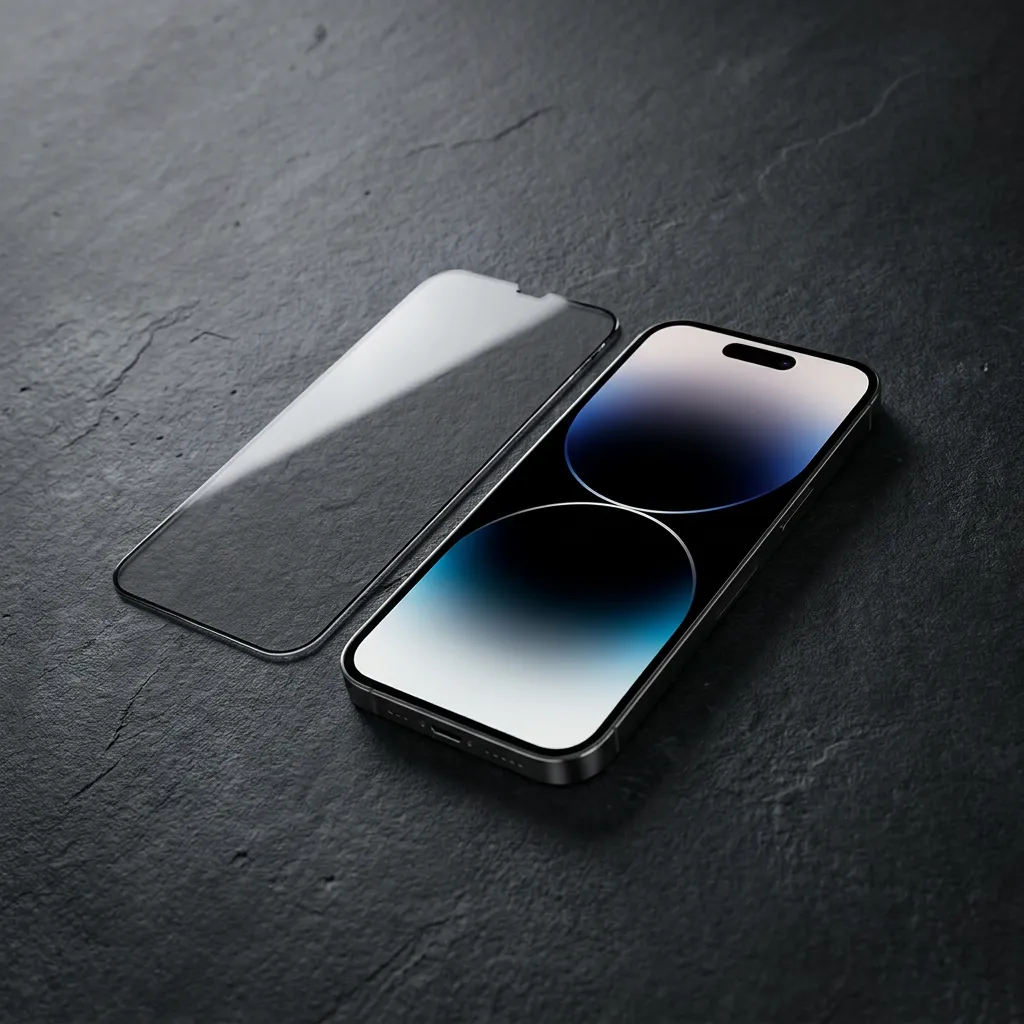
Our approach is to treat 9H as a starting point rather than a headline. The Anti-Glare / Anti-Reflective HD 9H Tempered 2-Pack Glass Screen Protector for iPhone 17/16 Pro pairs a 9H tempered surface with an anti-reflective coating, packaged as a two-pack so a cracked sheet never leaves you without protection.
Recommended product

A 9H tempered surface, an anti-reflective coating for daylight readability, and two sheets in the box. It is the version of "9H" we think is worth paying for.
Yes. Glass adds a slight, stiff "tap" and a very smooth glide. It also stays flat rather than curving around the edges, which is why fit matters more than it does with soft film.
A correctly specified protector on a modern capacitive display does not. Touch problems usually trace back to a poor fit or a protector that has lifted at the edge, not to the glass itself.
Functionally, the glass outlives the coating. Most people replace a protector when the anti-fingerprint layer stops wiping clean or after a hard impact cracks it. A two-pack covers both cases in one purchase.